
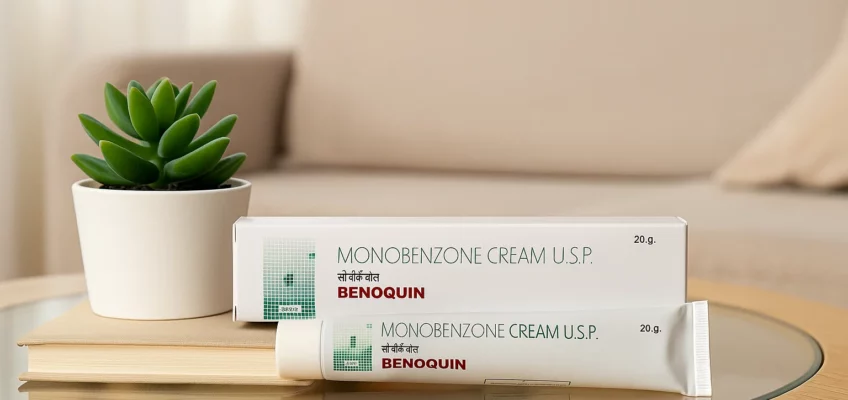
Monobenzone (brand name Benoquin) represents the most decisive clinical intervention for patients managing advanced vitiligo. Unlike standard brightening agents that provide temporary results, Monobenzone is a specialized medical tool used to achieve a permanent and uniform skin tone when repigmentation is no longer a viable option.
The Biological Mechanism of Permanent Depigmentation
Monobenzone operates through a unique physiological process that differentiates it from all other dermatological lightening agents. While traditional products inhibit enzymes, Monobenzone works by inducing a localized immune response that permanently destroys the remaining melanocytes in the skin.
- Irreversible Action: Once the melanocytes are destroyed, they cannot be regenerated, meaning the loss of pigment is permanent.
- Uniformity Strategy: The goal is to “bleach” the remaining pigmented skin to match the white patches caused by vitiligo, creating a singular, even complexion.
- Selective Use: Due to its potency, this treatment is strictly indicated for patients with extensive vitiligo, typically covering more than 50% of the body surface area.
Efficacy and Clinical Timeline
Depigmentation is a gradual biological shift that requires months of disciplined application and medical monitoring.
- Phase 1 (Months 1–4): Patients usually observe the first signs of pigment fading and spotty lightening.
- Phase 2 (Months 4–12): This period marks the primary depigmentation phase, where larger areas of skin transition to a milky-white tone.
- Phase 3 (Maintenance): After achieving a uniform tone, patients may require very infrequent applications to treat “islands” of pigment that occasionally resurface.
Because this treatment fundamentally alters your physical appearance and biological defense systems, reviewing Monobenzone before and after results is a critical step in the decision-making process. Understanding the real-world experiences of others helps set realistic expectations for the timeline and the eventual visual outcome.
Life Without Melanin: Essential Post-Treatment Care
Melanin is the body’s natural defense against DNA damage from the sun. By removing this pigment, Monobenzone users become highly vulnerable to environmental factors.
- Extreme Photosensitivity: The depigmented skin has zero natural protection against UV rays, leading to a high risk of severe sunburns.
- Lifelong Protection: According to the American Academy of Dermatology (AAD), patients who undergo depigmentation must adopt a rigorous, lifelong sun-protection protocol.
- Daily SPF: Application of broad-spectrum SPF 50 or higher is mandatory, even on cloudy days or when staying indoors near windows.
- Protective Clothing: Physical barriers like wide-brimmed hats and UV-rated clothing become essential lifestyle components.
Managing Potential Side Effects
As the body undergoes the depigmentation process, localized reactions are common as the remaining pigment-producing cells are neutralized.
- Skin Irritation: Many users report temporary redness, itching, or a mild burning sensation during the first few weeks of therapy.
- Peeling and Dryness: As the skin’s composition changes, localized peeling and increased dryness are frequent occurrences.
- Distant Depigmentation: In some cases, applying the cream to one area can cause lightening in distant, untreated parts of the body due to the systemic nature of the immune response.
Final Clinical Perspective
Monobenzone is not a cosmetic product; it is a life-changing medical treatment. It offers a final, definitive solution for those who have struggled with the psychological and social challenges of patchy vitiligo for years. However, the commitment to total sun avoidance and the permanent nature of the change requires a thorough consultation with a dermatological specialist. When used correctly, it allows patients to achieve a sense of uniformity and confidence that repigmentation therapies could not provide.
